

As I was sitting outside last night in the warmth of a summer night wind, a male deer quietly emerged and walked through the back yard, stopping briefly to hold my gaze as he nibbled on some grasses, and slowly walked off. In the dark, the slow, deliberate walk of those hooves felt so different to witness than the urgent speed of the daytime. It felt reassuring, those small cracks of quiet beauty that slip into focus, despite all the roads and blocks we put up to ignore them.
And as I’m working on another piece, it takes longer these days with so many daytime thoughts, work demands, the world swirling unstoppable thoughts. So I’m sharing an essay from a time when I was still in the midst of a cold winter, dreaming of warmer days, and impossible things.
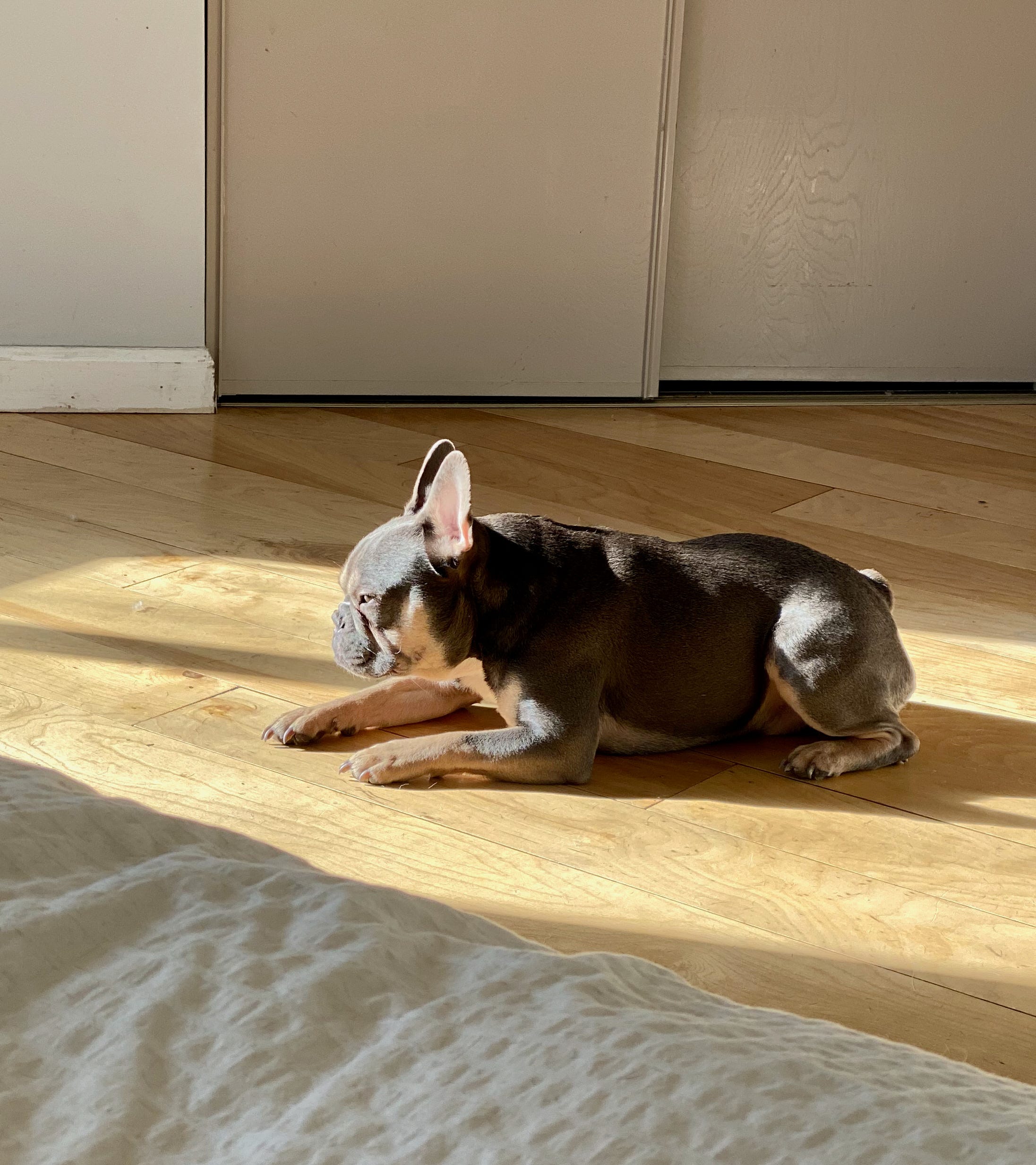
The days are beginning to change so swiftly, it’s that time in the turn of the year that the word melt moves back into the landscape in earnest—the sun higher and so noticeably bringing warmth to the still cold air that the house stays warmer. Last week it was a bit unseasonably cold, hovering in single digits to zero, and the house always has a hard time keeping up at those temps. Now within a week, the house is warm and full of light, despite temps only as high as 28F. My bulldog Gimli, enjoying the quiet of this morning, has slowly chased every angle of sun to bask in as the sunlight journeyed through the house. I learned years ago that a word for this is apricating—not so much becoming an apricot exactly, but the root of both words is the same—basking, of being exposed, open to the sun.
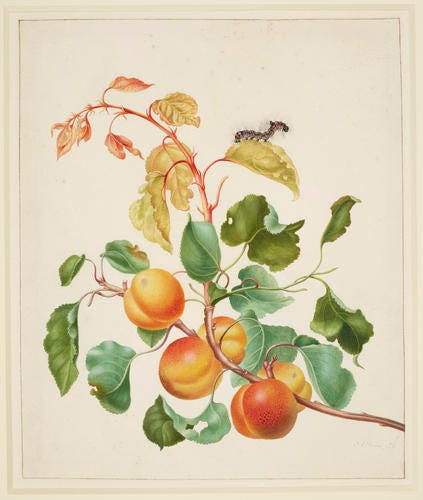
When I worked in Jordan I learned that a name for apricot in Arabic is mishmish (مِشْمِش)—which literally translated is never-never—i.e. impossible—a double not. It means that apricots are somewhat of an impossible fruit—only ripe the moment it’s picked from the tree, becoming a mealy mess if kept for any length of time. The term f’il mish-mish is essentially like saying “in a blue moon”—as in sure, when pigs fly. Sure, and we’ll eat apricots tomorrow. Or also, sure, tomorrow—when the apricots are ripe.
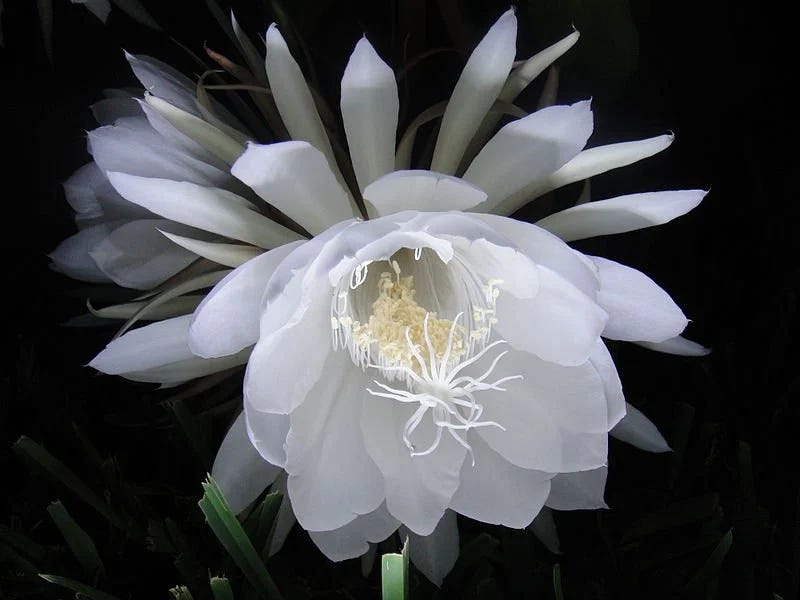
I love the idea of impossible things that exist nonetheless—those scarce glimpses or rare occurrences that when they do appear feel like magic, the impossible. Sweet, ripe apricots that last beyond an hour, the aurora borealis—especially viewings of reds and purples—or a fox at midnight holding your gaze through a window. Two full moons in one month. The flash of ice crystals that creates pillars of light in a cold sun. Ice ferns on windows in extreme cold. The chance to apricate in a sun that finally has heat again despite freezing temps. A flower that only blooms one night of the year en masse, that might be connected to the cycles of the moon, but no one knows for sure.
Across the middle east, apricot paste—thicker and jammier than fruit leather—is everywhere, not impossible and so delicious—the taste of tart fruit in the desert was always welcome to have on hand. It’s called amardine (also qamar al-din), which means “moon of the faith.” One theory for its name is that the paste arrives in the markets with the sight of the new moon in the month of Ramadan, marking the beginning of fasting. Amardine is often soaked and blended with rose water and made into a drink in Ramadan—often the first drink to have after breaking one’s fast, as it’s sweet, tart, cold, and welcome after a day of fasting in the heat.

Fernando Pessoa wrote about the longing for impossible things:
…The longing for impossible things, precisely because they are impossible; nostalgia for what never was; the desire for what could have been; regret over not being someone else; dissatisfaction with the world’s existence. All these half-tones of the soul’s consciousness create in us a painful landscape, an eternal sunset of what we are.1
It’s always fascinated me that we can long for something so keenly and yet have never perhaps personally experienced it—and Pessoa, as a Portugese speaker, spoke a language that had a word for this—saudade—a longing for something that does not exist. Other languages also have similar words—fernven in German, and hiraeth in Welsh—a longing or homesickness for somewhere you’ve never been.
There’s a painful landscape in those terms but also such beauty—a capacity to long for something that is invisible, perhaps that will never be fully known. And maybe it also means there are things we can sense that are simply not knowable through the typical ways that we make sense of the world. Maybe we are responding to the space between experiences, the knowing that there can be impossible things—precisely because they are impossible. We may never experience the sweet ripeness of an apricot the minute it is truly ripe, but we can imagine it. The space around it is calling to us, letting us know it could exist. And perhaps having space to imagine it is as much—if not more—a part of it as the thing itself.
The wind has been gusting through the trees today, sounding a bit like its kin, the waves of an invisible ocean breaking. It unsettles the dogs—Asta is even more anxious than usual and comes into my office/study to be reassured we are all safe.
I can feel that sense of unsettling in my own body—not a discomfort but an alertness, a sort of on-edge feeling that demands to be recognized, like the wind. I wonder what it would feel like to have that surge of energy that sets hurricanes in motion—to be invisible and need badly to be heard, felt, named. To call attention to presence with the force of gusts.
Maybe there’s something of that in the impulse to write—invisible, but still—like the wind’s howling, moving through branches that respond in kind, sweeping designs in the snow, branches strewn over the landscape. Tracks of thought/purpose/motion made visible. The seemingly impossible made possible.
Impossible objects are tricks of perception—like the non-orientation of a mobius strip, a Penrose triangle, Escher’s infinities of staircases leading nowhere. Illustrations where the mind quickly tries to fill in the gaps, making lines or objects into an expected sense when there is actually none. I love impossible objects because it’s another clapping reminder of how much work our minds do to create sense of what we experience. When I come across them it always reminds me of all that we don’t see, what possibilities there are if we allow what’s there to be “without any irritable reaching after fact and reason” we’ve been conditioned to recognize (thank you Keats). What might we do or see if we don’t rush to fill in those sensory gaps?

The painting above is one I’ve come to love ever since I first saw it a few years ago. I love that feels a bit like an impossible object—it’s so succinctly perfect. It feels impossible for it to be that simple and precise, to re-create a field of vision: black lines scattered across a field of white. Slight combinations of angles, and suddenly—ineffably—it is a cold, serene, field of ice expanding towards an invisible but inevitable horizon. It feels like it achieves the epitome of present absence. I thrill every time I see it.
In Japanese there is a word, ma (間)—often clumsily and obtusely described in English as negative space, because there is no word like it in English. But describing the space between, left open as negative space removes the expansiveness of the idea entirely. What describes it with more precision is, of course, metaphor, which is how the figures for it in kanji are depicted: the symbols for door and sun—or often, moon. Ma is a door through the crevice of which the moonlight shines through.
In the early eleventh-century novel The Tale of Genji (源氏物語)—often considered one of the world’s first novels, written by a woman, Murasaki Shikibu (紫式部)—there is a scene that is filled with this sense of ma:
It was the fifteenth night of the eight month. The light of an enclosed full-moon shone between the ill-fitting planks of the roof and flooded the room. What a queer place to be lying in!, thought Genji, as he gazed around the garret, so different from any room he had ever known before.2

When I learned that amardine means ‘moon of the faith’ that was what immediately came to mind—moonlight through the cracks in a door. The impossible—mishmish—becoming the moon of faith. All of the immense connective space around the celebration of an event, the sunlight, rain, and soil ripening fruit that can only be eaten as soon as it’s picked from the tree. The preparation of fruit the moment it is ripe, distilled into something solid to preserve its sugars, and later prepared by soaking and the addition of rosewater, made into a drink to quench a day of fasting. All of that space around one object. The moonlight that seeps between crevices, a moon of faith—the space and time necessary to create something that has layers of meaning.

Fruit on a tree is something that always seems impossible to me—a magic that those who live in warm climates know almost as a part of every day. It’s something I’ve never experienced as part of my own daily life and I’ve always found it magical. I was reading a friend’s newsletter this weekend, in which she wrote of reverie, and longing for a place that no longer exists from her youth—remembering the mango, lychee, apple, and bayberry trees. And in that space of reading, I thought of times spent among lemon and avocado trees in California years ago. The space around those memories shoring it up, giving it strength.
Maybe ma is the wind on days like today, when the invisible calls for attention, to imagine impossible things, to notice the light through the cracks, remember impossible things that are possible despite that our immediate experience—or the world—would demand that we believe otherwise. To turn attention towards the open spaces between, the pause, and the force of a gust giving room for memory, imagination, expansiveness. The beauty of the margin, the world in between subject and object.
Sometimes all I want to do is think of apricots, of mishmish, the impossible, the fleeting, the space between two full moons in a month, the unexpected attention of moonlight streaking through cracks in a door. The unexpected, invisible warmth of a high-latitude sun that both the dogs and I could not ignore.
From Fernando Pessoa, The Book of Disquiet.
Shikibu, Murasaki. The Tale of Genji, trans. Arthur Waley (Garden City, NY: Doubleday & Co., 1955), p. 80.
Freya — what a lovely blend of feeling and longing for cooler icy temperature as I sit her on my sun porch apricating within the rays of the late day sun, enjoying dinner, a glass of wine and your writing. Thank you for introducing this most wonderful word - I will be sure to add it to my ever growing list of words I must use more. Sending warm weather blessings and prayers for slightly cooler temps your way on the coast.