

A return

Hello friends—I know, it’s been a while, and I’ve missed you.
Thank you to all of you who have supported my work and continued to wait for me, it truly means the world to me. While my words have not been appearing with regularity in your inbox, I have still been writing, and your support allows me to continue to do that—and hopefully I can share it with you all when ready.
In the meantime I’ve been wintering1 like Demeter, waiting for the return of spring. Moving out of a place lived in for over two decades, moving a home of fifteen years across seas from Anchorage, waiting for months for containers, moving from rental to finally, a new home, adjusting to life with our son away at college for the first time—let alone the chaos in this country and supporting friends and colleagues whose jobs have been lost or are in limbo (Alaska’s population is ⅓ federal work) has been far more of a fallow period than I originally intended it to be. How are you all finding ways to manage the stress we’re all feeling? I would love to hear, because I have not been able to sleep most nights, thinking of the realities of what we are all witnessing.
So this is a different tone or subject matter than most of my other essays. I didn’t want to try and find something that doesn’t address the obvious. That times are hard, that life is a whole lot of suffering, which too many people have known for far longer than the epiphanies of so many people in this country are now having. And maybe that’s the good that might arise out of this mess.

My friend Anna wrote recently about generative rage, about how to turn our rage into something creative, meaningful. I once wrote—long before all of this chaos—that my anger feels like a fire that reminds me I am lit from within. It burns to remind me to fight, to create, to love, to fiercely hold onto what is important. I use my rage to love this world as much as possible, let out every fly or wasp that comes into our house, a fierce determination to not destroy life whenever possible.
Another dear friend wrote to me, after I wrote an essay about anger, telling me more about the Hindu goddess Kali, of how her rage is part of her divinity, purpose. Maybe it is that divine rage that we all need to harness right now, to turn it into something generative. Let it burn away the chaff of what we’ve been using to keep ourselves separate, insulated from the world and all of its wholeness—land, insects, animals, wind, leaves, trees, birds, people. I’ve been stepping outside so often these days, to notice the trees, the birds and remind myself we are part of this world.
With the amount of destruction occurring, I’ve also been thinking a lot about the ease of destruction, of how creation is hard work. Something also forged in fire—a longing and desire to bring something forth, to interact with the world, rather than tear it down. Something that the forces working right now have no concept of. Disruption, destroy, remove, erase. It’s taking the easy way out of everything rather than doing the hard work of care.

So much of what we are taught or told wants to binary everything into a black and white that makes it easy to understand, rather than making any effort to really understand or navigate the nuance between. Binaries are fundamentally in opposition—where does that leave anyone but in a constant fight? And this is not about politics—I’m talking more about a mindset that leaves you fighting yourself by being conditioned into a binary world. When the reality is everything is connected, not separated out into pieces of what should be whole.
And so I’ve also been thinking a lot about seeking without answers, of how mystery to me seems to grow more and more precious and worth safeguarding. Mystery is expansive. It is possibility. Ignorance may be bliss, but I think the true bliss might be in tending to, considering, and allowing for mystery to just be.
A favorite quote of the brilliant Tove Jansson keeps coming to me lately: “All things are so very uncertain, and that's exactly what makes me feel reassured.”2
I’m trying to hold onto uncertainty as the space where things may still open.
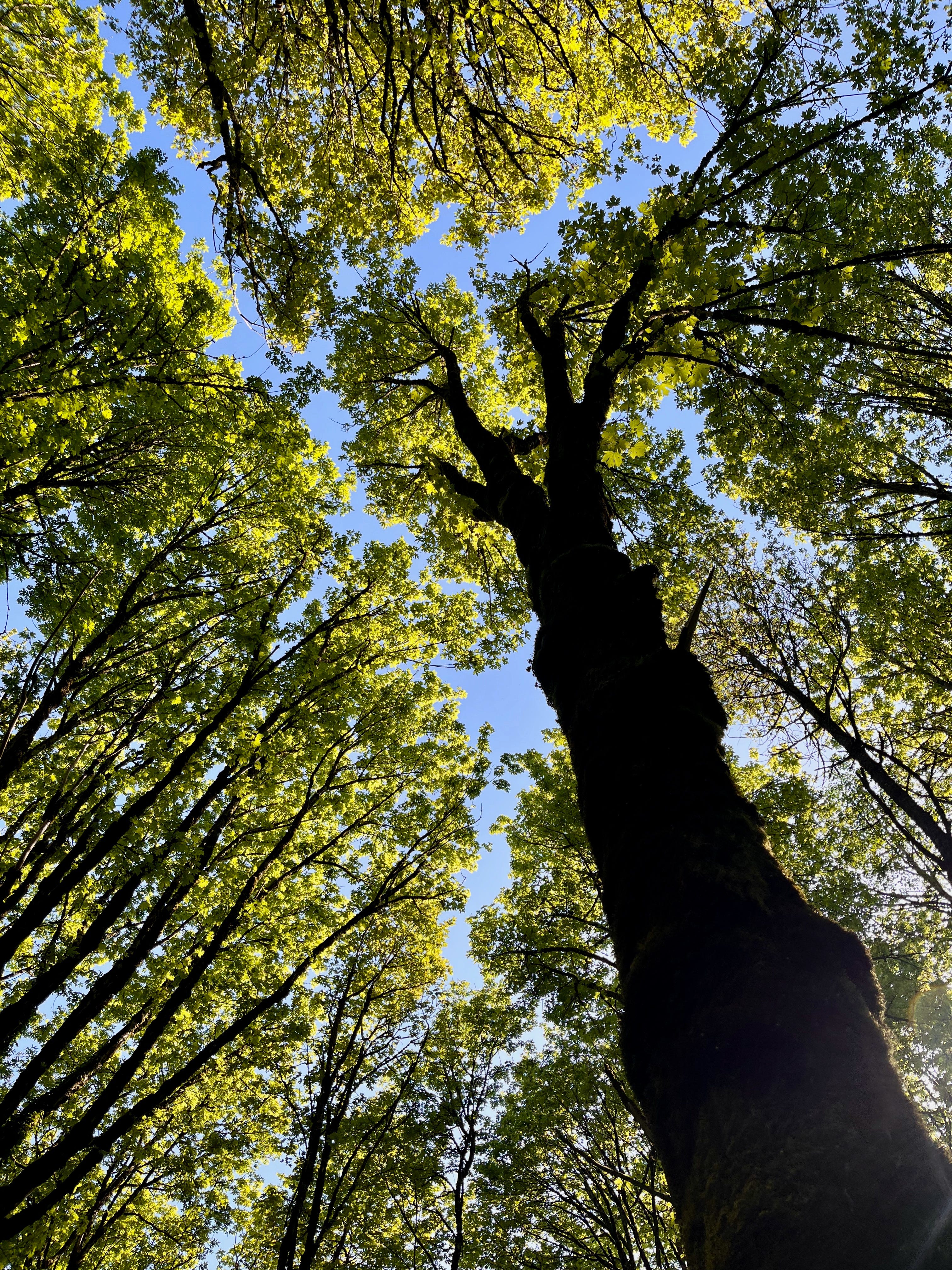
In a book on mysticism, Simon Critchley writes:
How can there be a song of songs? Yet this excessiveness of utterance it what is being asked of us in approaching mysticism. It is only when words break, by saying too much, and by saying too little in saying too much, that we might be released towards that which exceeds propositions: an openness to the simplicity of mystery.3
There is a simplicity in what is not (yet) known that is reassuring.
I think part of my block in writing, reading in the midst of so much change was an instinct to pause, to be silent. So many words are used and being regurgitated into more words (including books by friends and even a a poem of my own, it turns out) and the destruction of institutions, the persecution of others as scape goats for the powerful, the cruelty of it all makes me want to both rage and find the quiet in between. Where words break. There is certainly too little said in too much.
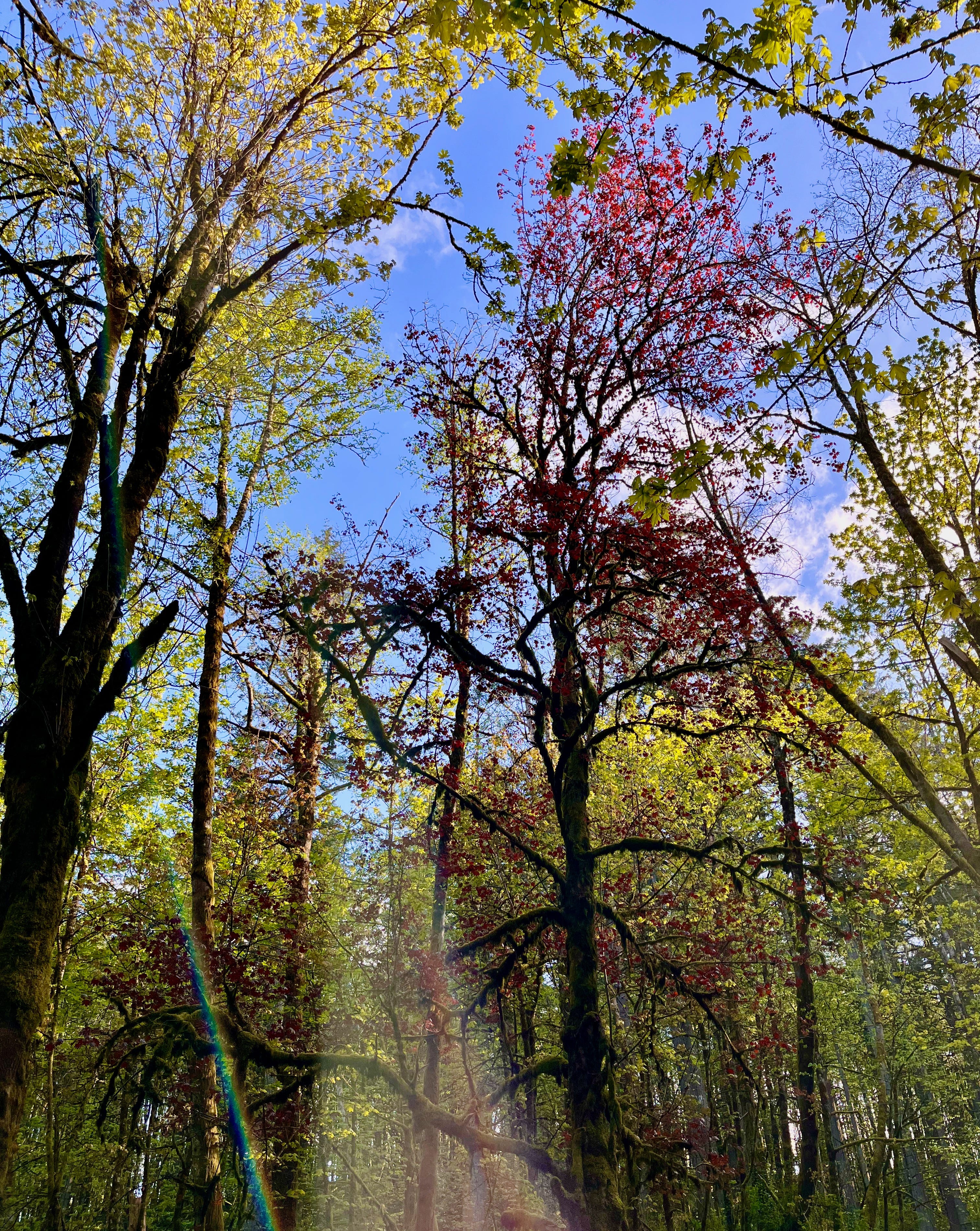
I crave something more simple in such moments—the slow return of spring in the Pacific Northwest over months—such a shift from the week it takes in June for the leaves to emerge in Anchorage. Here it feels like spring takes her time, beginning with first crocus blooms in early February, a quiet, deliberate, testing-the-waters return, taking shifts from those bulbs waiting for the first warm sun, to trilliums blooming white, than turning purple, cherry and plum trees, then dogwood blooming. Then redbud. And always the backdrop of a maple green that begins to glow as layer upon layer of light and leaf is added. The sound of wind in tall trees in the new leaves. This is all what we need poetry for—to pay attention to the spaces between, as much as the words on the page. The negative space offering as much if not more at times than that which is in front of us.
(A raft of baby spiders emerged this week casting shadows in the evening sun and I could have watched them for hours….)
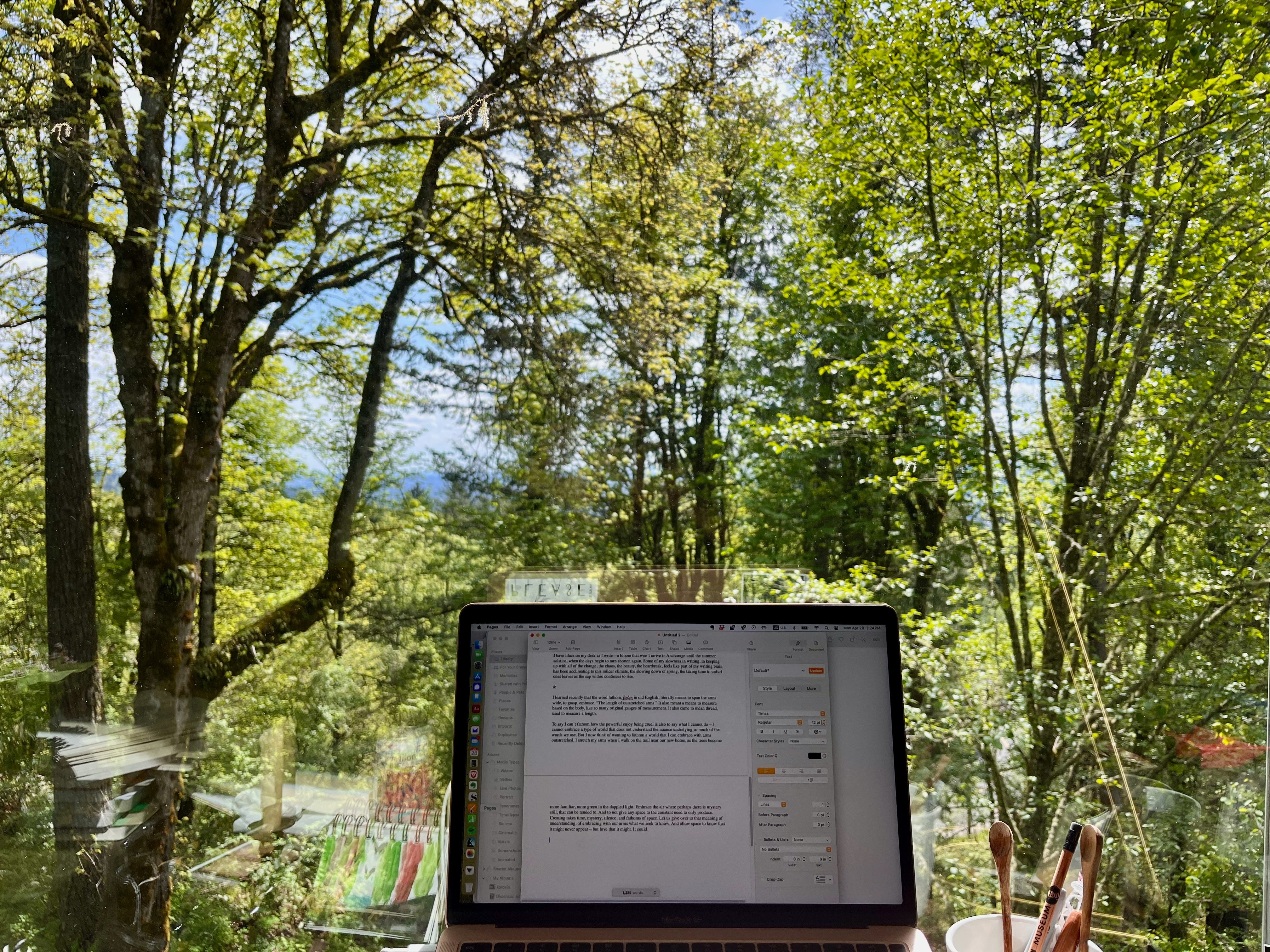
I have lilacs on my desk as I write—a bloom that won’t arrive in Anchorage until the summer solstice, when the days begin to shorten again. Some of my slowness in writing, in keeping up with all of the change, the chaos, the beauty, the heartbreak, feels like part of my writing brain has been acclimating to this milder climate, the slowing down of spring, the taking time to unfurl ones leaves as the sap within continues to rise. To listen to a need for pause and allow some things to settle, see where they best land of their own volition, matched with gravity’s pull.
I learned recently that the word fathom, fæðm in old English, literally means to span the arms wide, to grasp, embrace. A fathom is then “the length of outstretched arms.” A means to measure based on the dimensions of the body, like so many original gauges of measurement. Which grew to also mean a thread, the length of an embrace, used to measure depth.
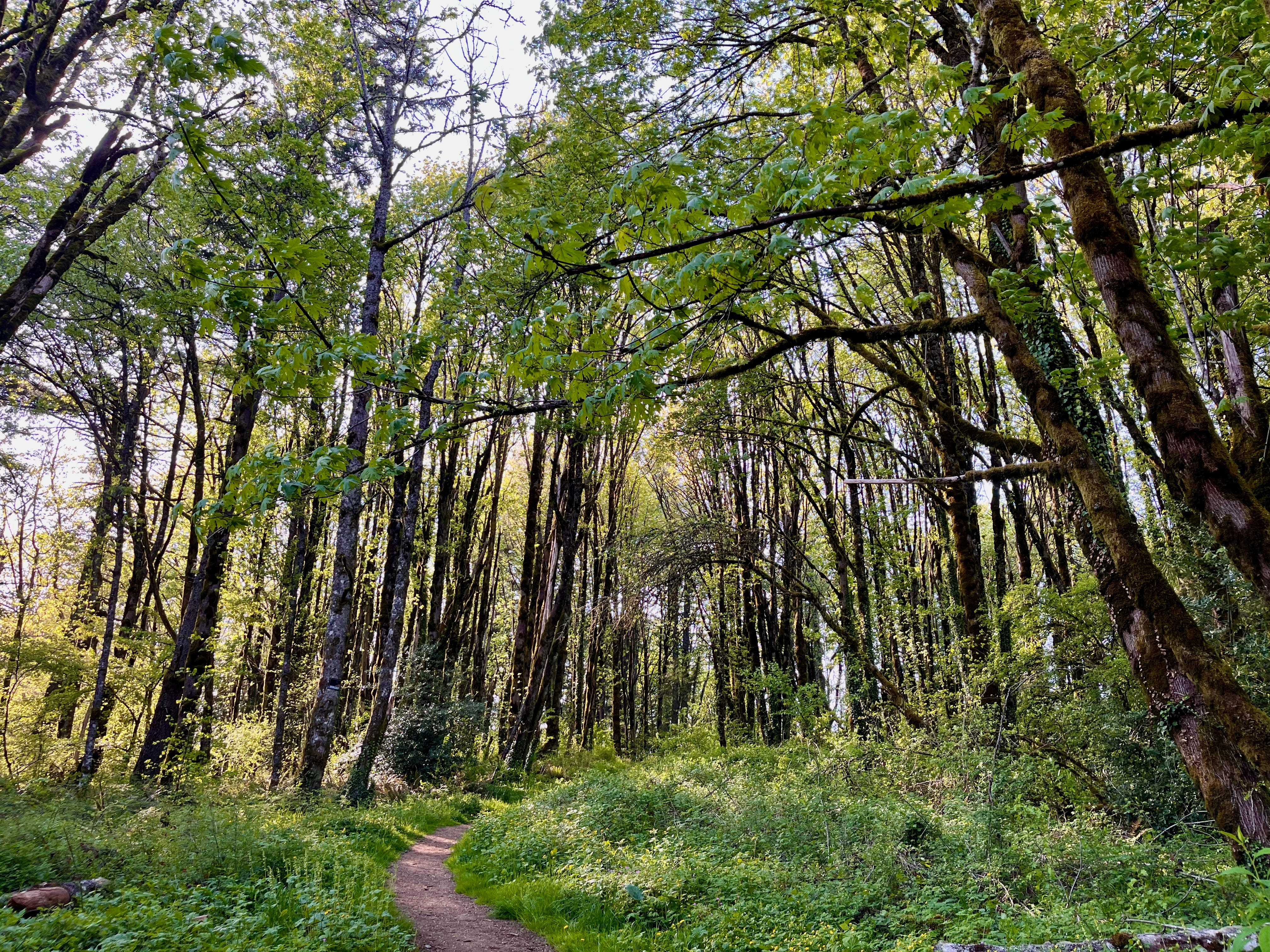
To say I can’t fathom power and cruelty is also to say I cannot embrace a world that refuses to understand the meanings underlying so much of the words we use, the history we have been handed. Instead, I think of how I want to fathom the world. I stretch my arms as I walk on the trail as it becomes familiar to me near our new home, as the shape of the trees outside my desk become more familiar, more green in the dappled light. Embrace all where there is mystery still, that can be tended to. To fathom—or try to—the things that don’t offer easy answers. To embrace the rage, silence and find the fire between.
And to not give in to the constant need to produce. I want to create. Creating takes time, mystery, silence, and fathoms of space. I’m trying to give over to that meaning of understanding, of embracing with our arms what we seek to know. To allow space to know that the world we want might never appear—and still love that it might. It could.
Thank you for this needed meaning in my life Katherine May
“the cruelty of it all makes me want to both rage and find the quiet in between” yes yes yes. What the world would label as ‘creative block’ is infact a respite and rebellion in the sacred solitude of one’s heart- a hard NO to the systemic injustices which also keep us little by pressuring us to grind.
Oh friend, how have I missed your words! But I am also glad you are pausing often to reclaim your time to dwell in wonder and mystery- letting it all sink in and rest and turning it into these absolute gold of an essay you come up with. I am here for it - always! Love you Freya!
So happy to have you back! I've missed your voice and fierce words so very much - but am so, so glad you listened to the pace your body was yearning for! I've been finding it so hard to create in these current moments. Unsure which injustice to latch onto. Overwhelmed at the sheer volume of them. That need to constantly create in a capitalistic society has pushed up against my own bounds too many times in the last few months. Sending so much love!! Welcome back, friend 💜